Porcelain pavers are gorgeous. They're sleek and modern, and they look great in a showroom. So it's fair to ask before you commit: are porcelain pavers slippery?
The short answer: smooth or polished porcelain pavers get slippery when they're wet, and in Oregon they're wet from October into spring. Textured, outdoor-rated porcelain holds traction much better. For main walkways and steps around Portland, we recommend textured concrete pavers or rough-faced natural stone, and we keep smooth porcelain to covered or low-traffic areas.
At Olguin C Landscaping, a landscape design and construction company based in Beaverton, we build patios, walkways and steps across the Portland metro. Paver choice comes up on almost every project. Here's what we've learned about what stays safe underfoot in our weather, and what looks better in the catalog than it does in January.
Smooth Porcelain Gets Slick When It's Wet
Polished or very smooth porcelain is the clearest example of a paver that looks right but isn't a good fit for Oregon. Add rain, a film of wet leaves, or a morning frost, and that smooth face loses its grip fast.
Manufacturers do make textured outdoor porcelain, and it's a different story. It has a rougher surface built for traction, and it can work well. The catch is that the most eye-catching styles tend to be the smoothest ones, and that's what people fall in love with in photos.
Slip resistance is measured with a rating called DCOF (dynamic coefficient of friction), and many outdoor products also list a ramp-test "R" rating. Ask for both numbers on any porcelain you're considering, make sure it's rated for exterior use, and never use indoor tile outside. The Tile Council of North America's FAQ on the ANSI A326.3 slip resistance standard explains how DCOF ratings work, including the separate classification for exterior wet areas.
A quick test before you buy: ask for a sample, pour water on it, and step on it in the shoes you wear to take out the trash. If it feels slick in the showroom, it'll be worse with leaves on it in December.
A Real Example From One of Our Maintenance Clients
One of our clients has outdoor porcelain tile around their pool, which is unusual enough in Oregon. It's beautiful. Every year, though, we remind our property maintenance crew not to walk across it during winter service visits. It gets that slippery once the weather turns.
That's fine around a pool that sits unused for half the year. It isn't fine on the walkway your delivery driver uses, the path from the driveway to the front door, or the steps out to the garage. We don't recommend smooth porcelain for any main walkway or high-traffic route.
What Makes Pavers Slippery in the Pacific Northwest
The surface is only part of it. Around Portland, a few local conditions turn an okay paver into a hazard:
- Moss and algae. Shady patios under firs and maples grow a green film over the winter, and it's slick on any material.
- Wet leaves. A layer of matted leaves on hardscape is like walking on a wet tarp. Regular fall cleanup matters as much for your walkways as for your lawn.
- Standing water. If the base wasn't graded to drain, water sits in low spots and freezes on cold mornings.
- Frost and the occasional ice storm. We don't get much snow, but icy mornings come every winter.
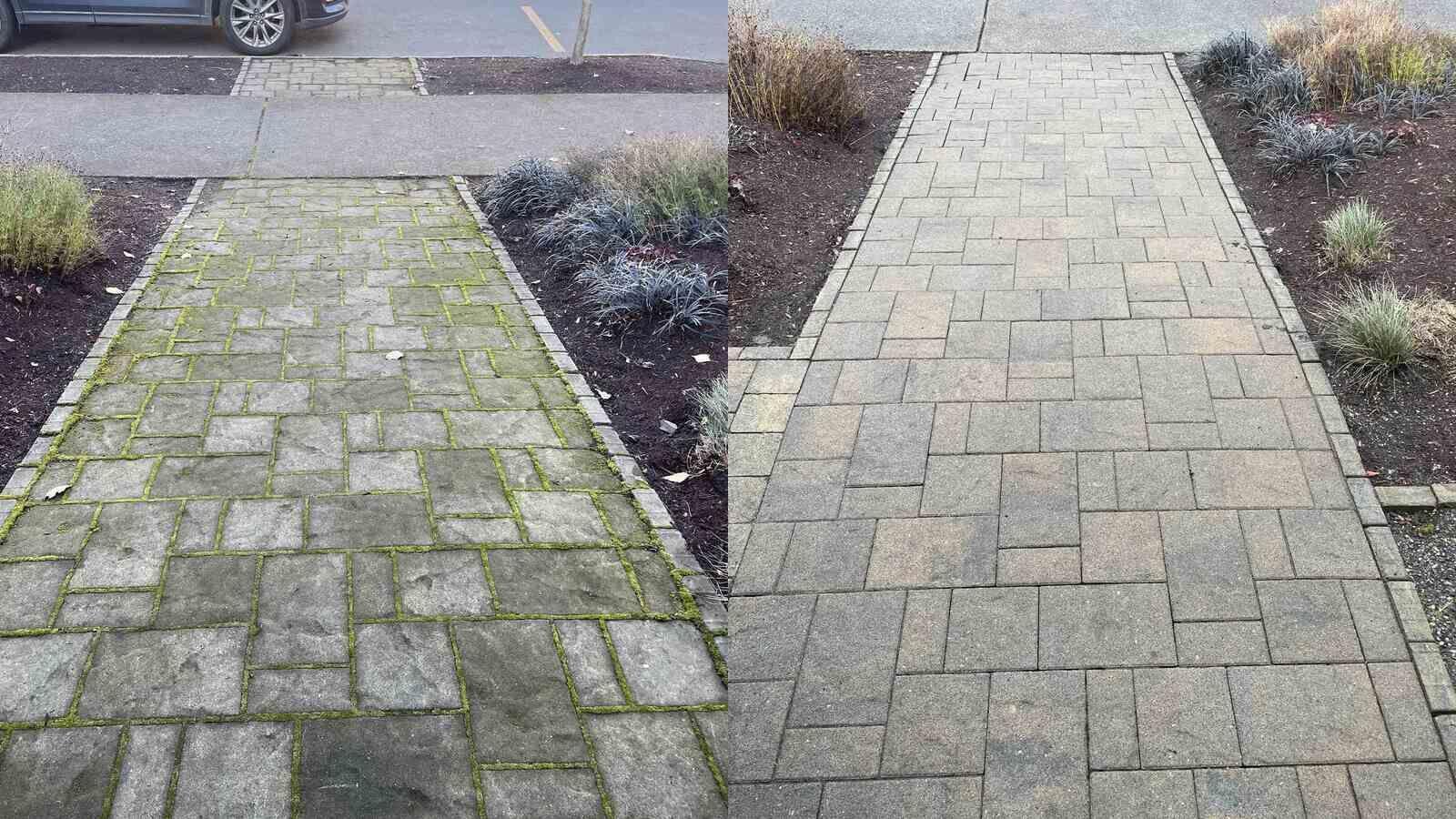
Left: moss filling the joints and faces of a front walkway after a wet season. Right: the same walkway after cleaning. Moss is slick on any paver, textured or not.
Moss and leaves are maintenance issues. Drainage comes down to construction. Pavers on a properly graded, compacted base shed water instead of holding it. If water is already pooling on your patio or lawn, our guide to why your yard has standing water covers the usual causes, and a French drain is often part of the fix.
Best Pavers for a Wet Climate
If you want something that stays safe underfoot through a Portland winter, these are the options we steer people toward.
| Paver type | Grip when wet | Best for | Oregon notes |
|---|---|---|---|
| Textured concrete pavers | Good | Patios, walkways, driveways | Our default. Durable, many styles, traction in the rain. |
| Rough or split-face natural stone | Very good | Paths, steps, hillside routes | Flagstone and basalt fit the look of many Oregon properties. |
| Textured outdoor porcelain | Good | Modern patios | Confirm it's exterior-rated and check the DCOF and R rating. |
| Smooth or polished porcelain | Poor | Covered or low-traffic areas only | Gets slick with rain, leaves, moss or frost. |
Textured concrete pavers. They're durable and come in a lot of styles, and the surface gives you traction even when wet. For most paver patios and walkways, this is where we start.
Natural stone with a rough or split face. Flagstone, basalt and other natural stone with an uneven surface grip well and suit many Oregon properties. Our flagstone patio guide goes deeper on that option.
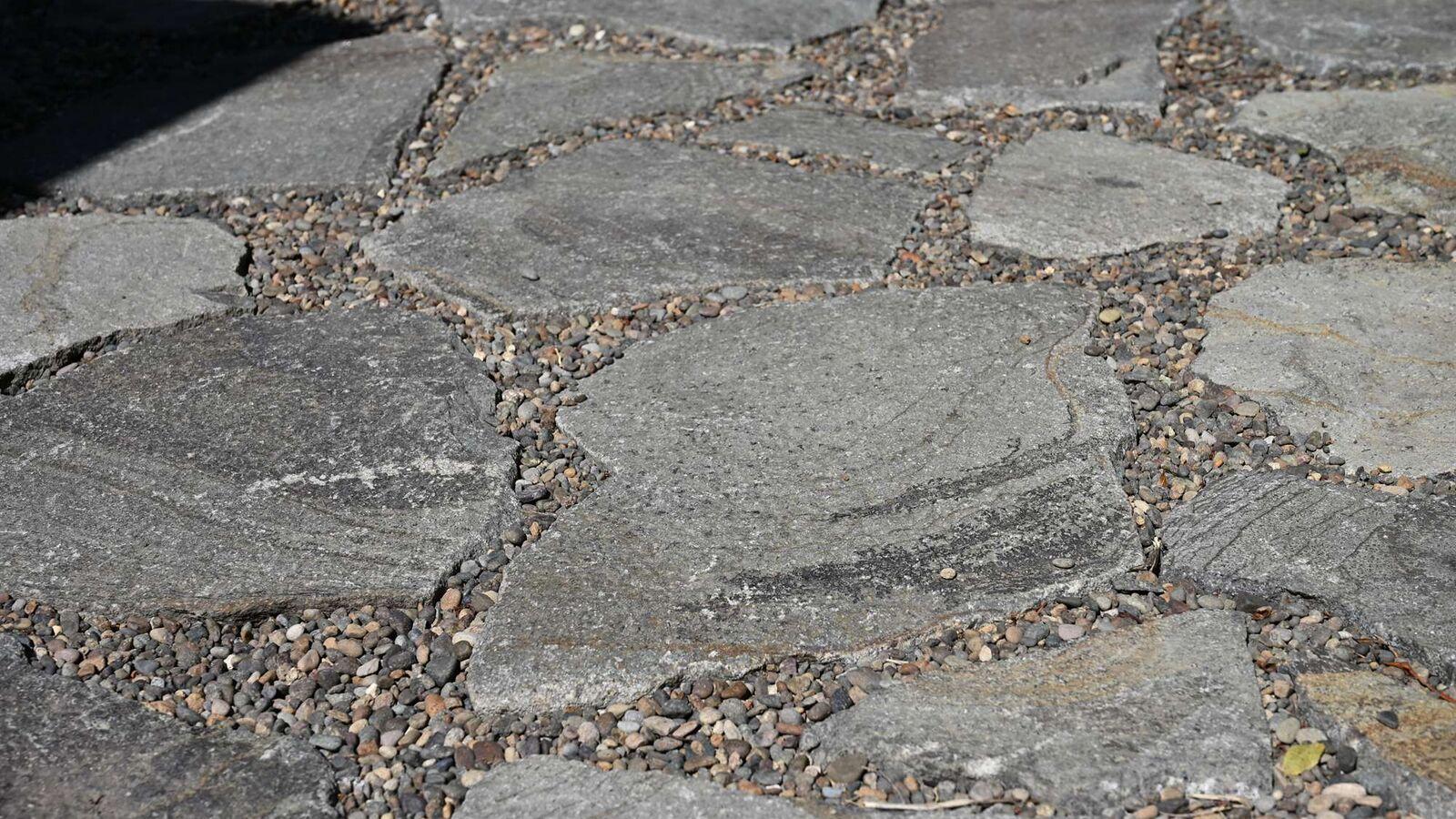
Natural flagstone set in gravel. The uneven face and open joints give your shoes something to grab, even after a downpour.
Textured porcelain. If you love the modern look, choose an outdoor porcelain built with texture, and keep the smooth versions to low-traffic or covered areas.
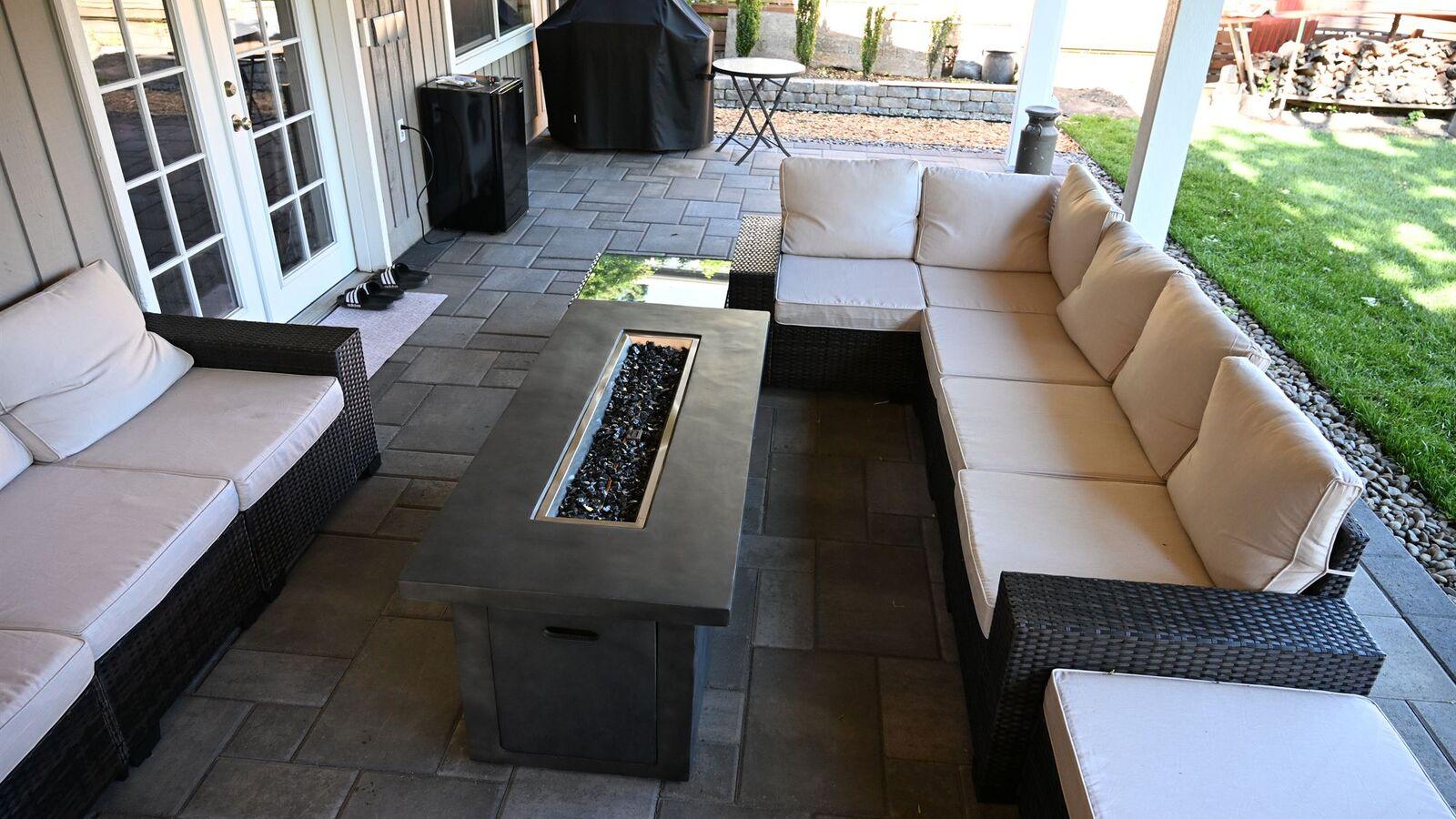
Under a patio cover, surfaces stay much drier in winter. If you have your heart set on a sleeker look, a covered area is the place for it.
Grip add-ons. For steps and slopes, we can add traction strips or treads to almost any surface if you want extra peace of mind.
So the answer isn't "never porcelain." Match the surface to how the space actually gets used in December, not just how it looks in July. If you're weighing options, a design consultation is a good time to look at samples side by side.
Where Traction Matters Most: Paths and Steps
Be strict about texture on the routes you walk every day, in the dark, in the rain. That means the front walk, the path to the shed or garage, steps on a slope, and the route to the fire pit.
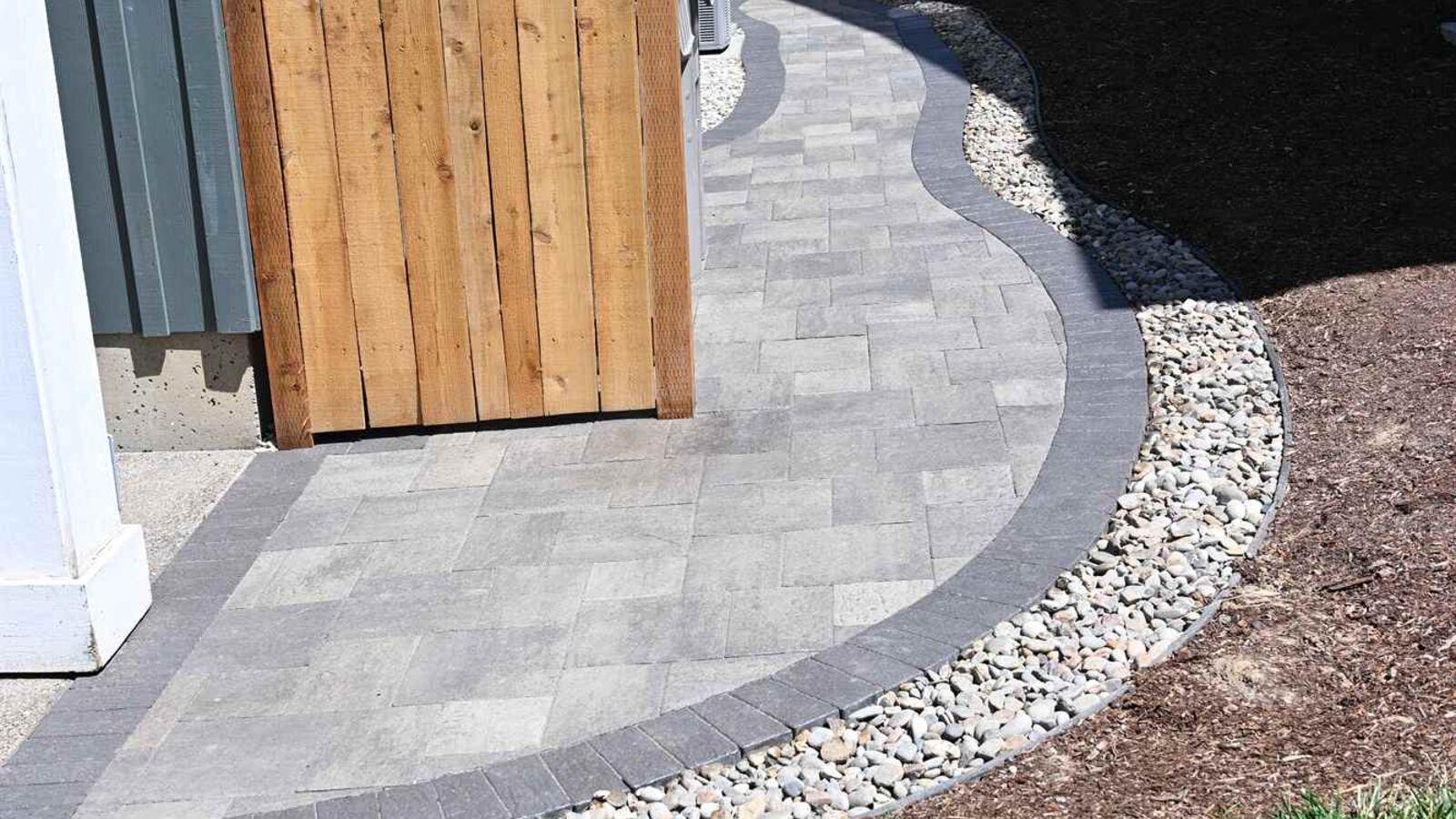
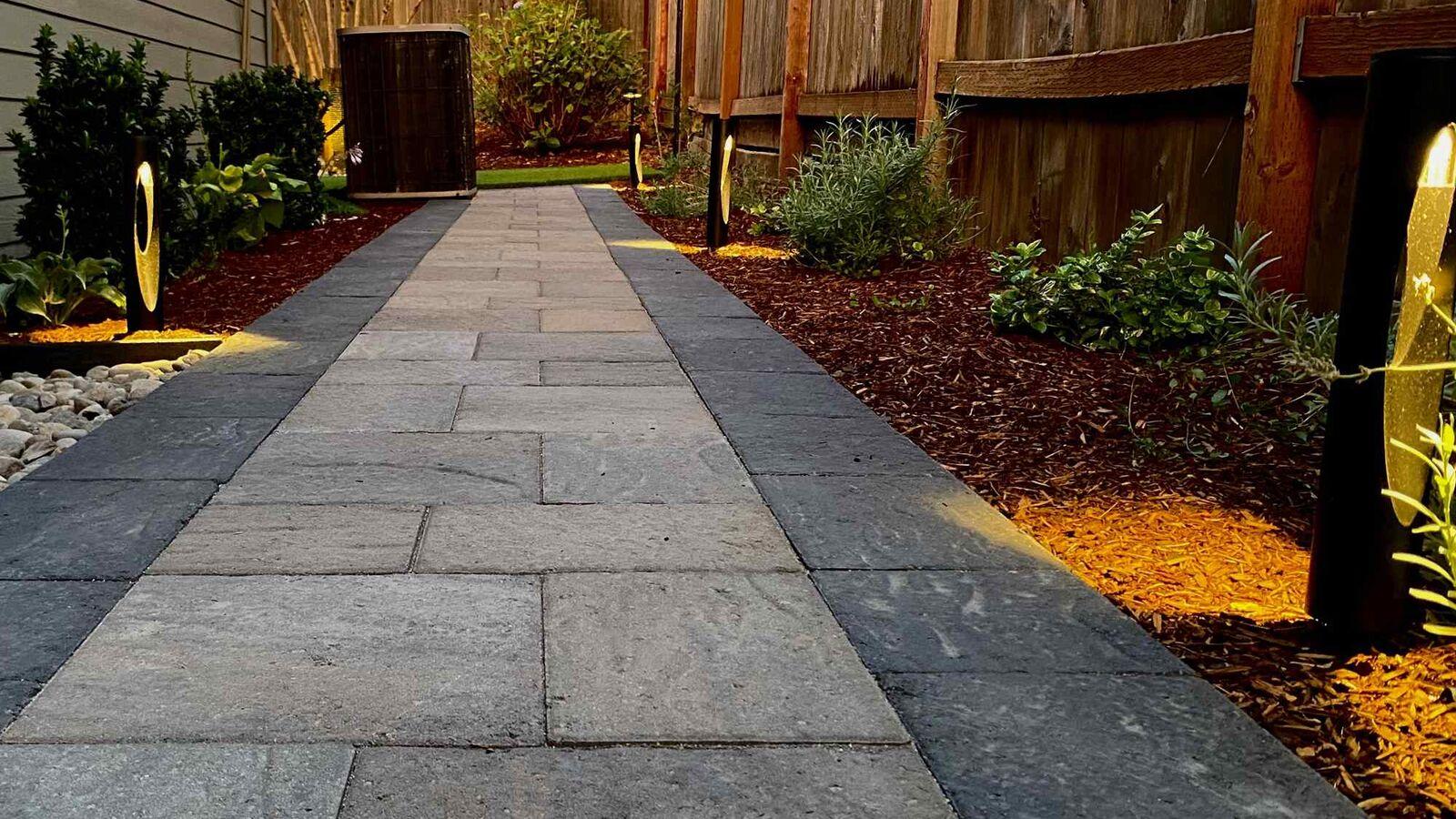
A side-yard path to the gate is one of those everyday routes. A textured paver with a defined border is easy to see and steady underfoot.
We're finishing a project right now for an older couple in a heavily wooded part of southwest Portland. Their worry was simple: how many more winters could they safely manage the muddy, slippery hill around their house? We built several paths so they'd have options, set natural stone steps into the hillside, and added railings. We picked stone with a textured surface specifically so they'd have traction when it's wet or icy. Every one of those choices was about walking safely in February.
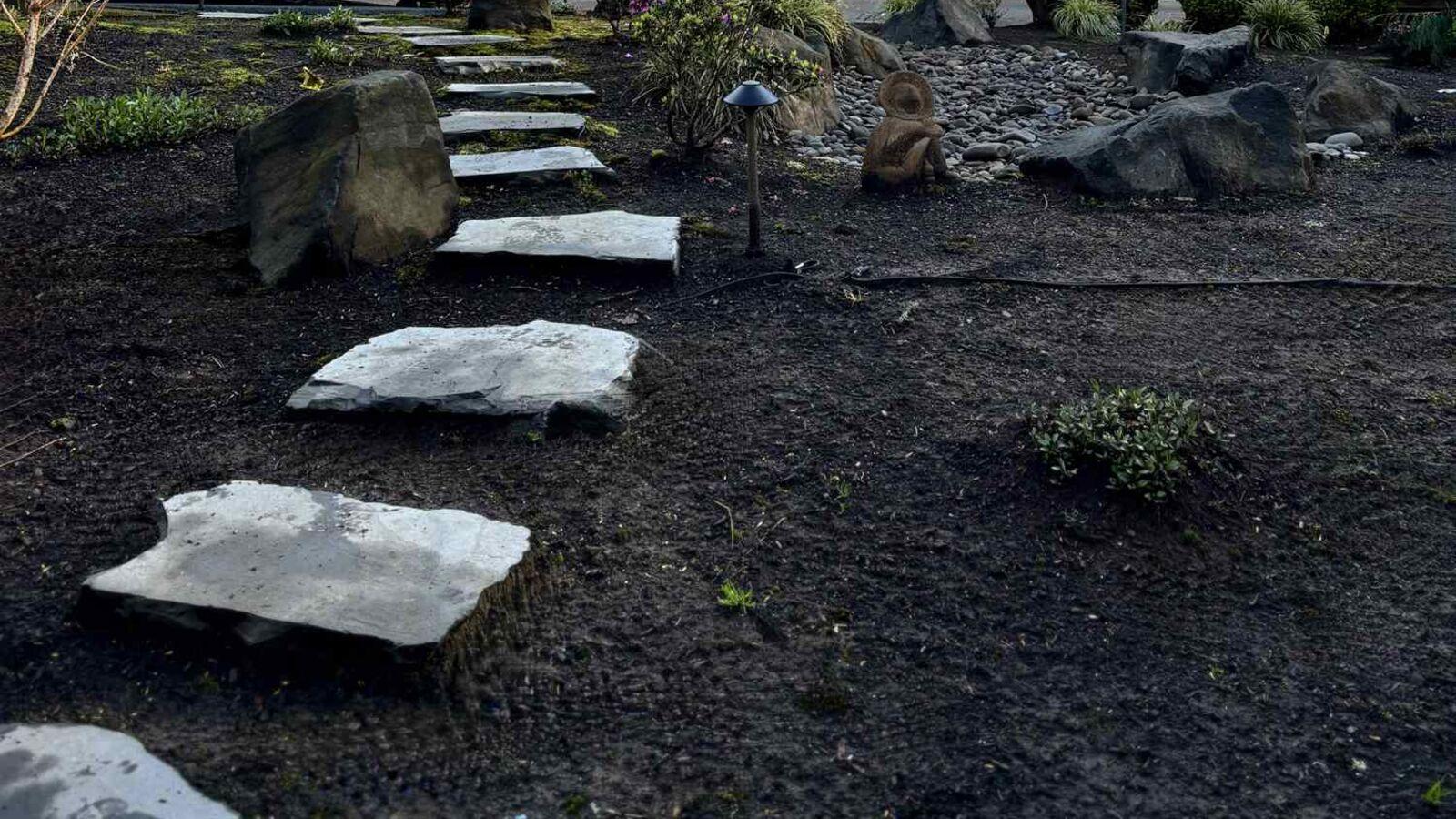
Natural stone steppers set into a sloped bed. Rough-faced stone is our go-to wherever a path climbs a grade.
Slopes bring their own challenges. Runoff, erosion and soft soil all make a hillside path harder to keep safe, so we often pair stone steps with erosion control and grading. For more on building steps that last, see our guide to step installation in Portland.
Lighting matters as much as texture once the days get short. Step lights and path lights show you exactly where each edge is, and we can build outdoor lighting projects in winter too.
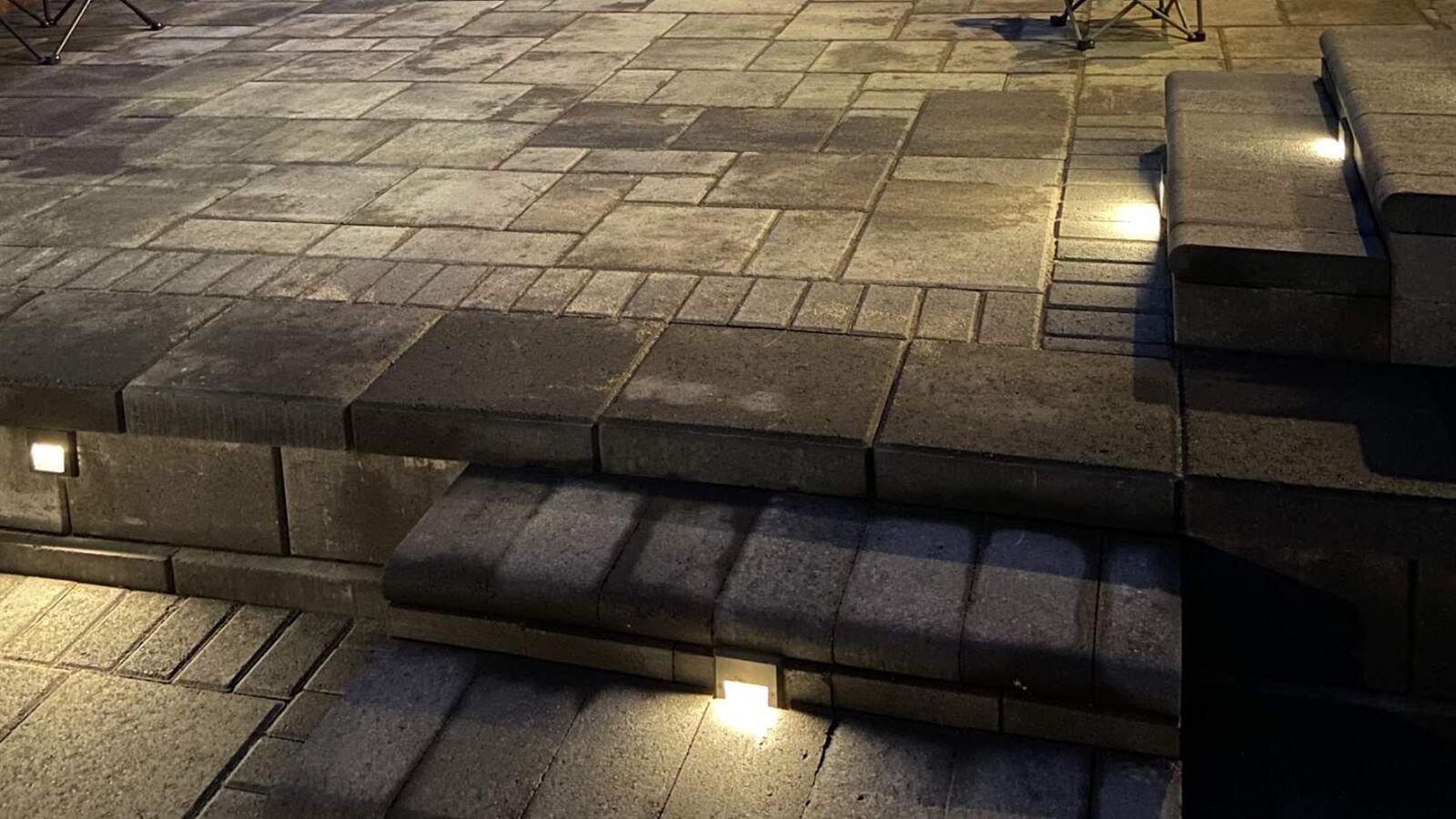
Built-in step lights mark every tread on these paver steps. On a wet winter evening, seeing the edge is half the battle.
Pick the Paver for December, Not Just July
Smooth porcelain is beautiful, and it has a place in covered or low-traffic areas. For walkways, steps and anywhere people move every day, textured surfaces are the safer choice in Oregon's wet months. Pair them with a well-drained base and regular leaf cleanup and they'll stay good-looking and safe for years.
If you're planning a patio or path and want help picking materials that fit how you'll actually use the space, take a look at our hardscaping and paver services, browse finished projects in our gallery, or request an estimate. We serve Beaverton, Portland, Hillsboro, Tigard, Lake Oswego and SW Washington.
Frequently Asked Questions
Are porcelain pavers slippery when wet?
Smooth porcelain can get very slippery when wet, especially with leaves, moss or frost on it. Textured, outdoor-rated porcelain is much better, but we still don't recommend smooth styles for main walkways in Oregon.
What are the best non-slip pavers for a patio?
Textured concrete pavers and natural stone with a rough or split face both hold traction well in wet weather. They're our usual recommendation for Portland-area patios and paths.
How do I stop my pavers from being slippery?
Keep them clear of leaves and moss, make sure the patio drains so water doesn't pool, and consider traction treads on steps. On a smooth surface, the long-term fix is sometimes replacing the high-traffic sections with a textured paver.
What slip rating should outdoor porcelain have?
Look for porcelain that's rated for exterior use and lists a DCOF value and an R rating for wet conditions. Ask the supplier which rating applies to outdoor walkways, and test a wet sample before you buy.
Is porcelain a good choice for a pool deck in Oregon?
It can look stunning, but expect it to be slick in the off-season. We tell our own crews to stay off one client's porcelain pool deck in winter for exactly that reason.
What is the best patio material for Portland rain?
For most Portland-area homes, textured concrete pavers are the best all-around choice. They grip when wet, handle freeze-thaw, and come in many styles. Rough-faced natural stone is a great option for paths and hillside steps.