A homeowner calls convinced their new backflow device is leaking. Water keeps showing up in the same spot near the irrigation line, weeks after the install was finished. It's a reasonable thing to assume, and it's also, more often than people expect, the wrong diagnosis — one of the most common calls we get for yard drainage services in the Beaverton area.
The Backflow Call That Wasn't a Leak
Cristino Olguin walked through exactly this scenario recently. After a backflow installation, a customer called about water pooling near the device. The first visit ruled out the obvious cause: the water meter wasn't moving at all, meaning nothing was actively running or leaking through the system. The second visit ruled out the irrigation entirely, shutting it off completely to see if the pooling stopped. It didn't.
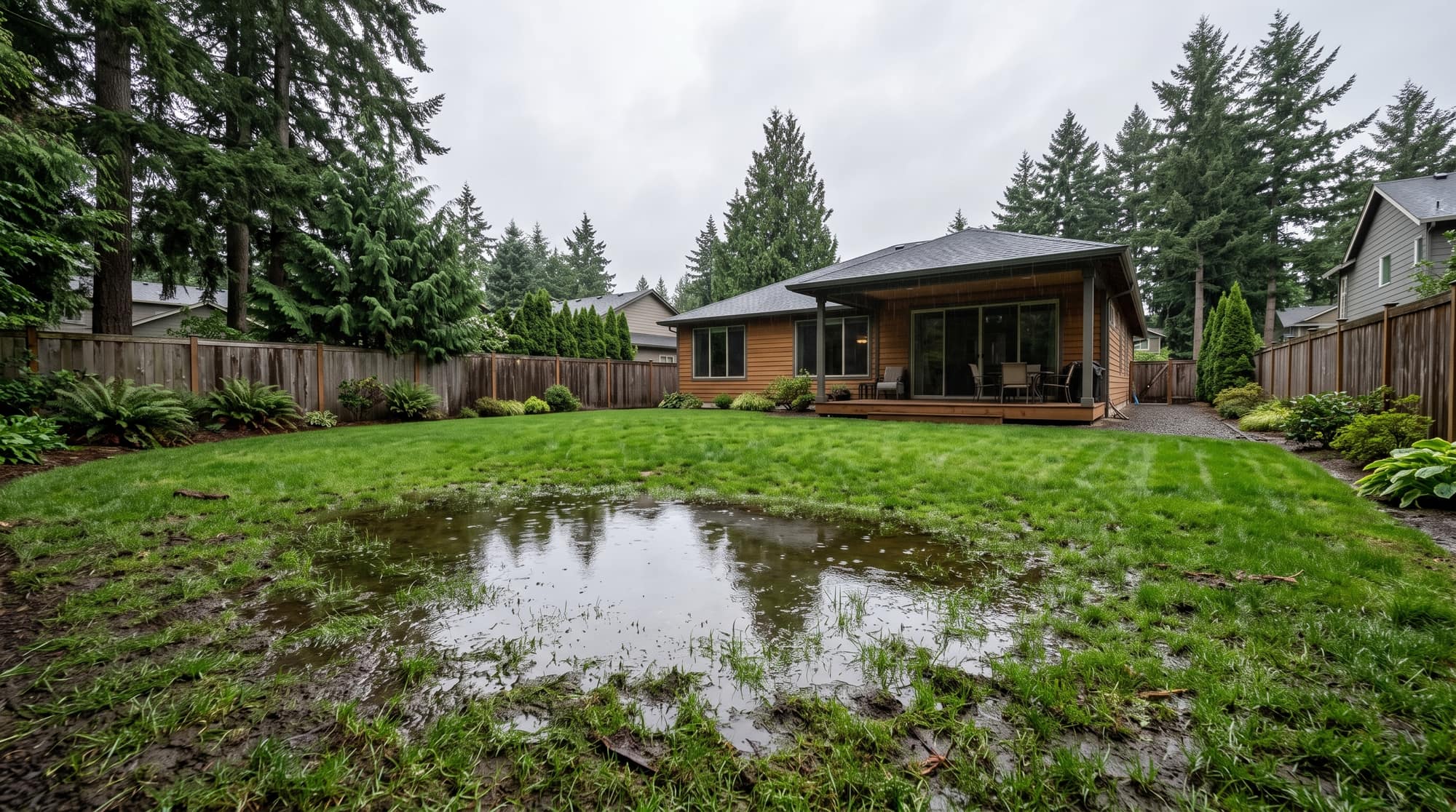
What was actually happening had nothing to do with the backflow device. It was tailwater, water settling into a low point created by the yard's own elevation changes. "Drainage issues happen where the water finds its low spot," Cristino explained. "It could be rocky underneath, it could be clay soil, but a lot of the time it's elevation." Two visits and a process of elimination were needed before landing on the real cause, which is a useful reminder that standing water rarely means what it looks like it means. When the irrigation system really is the source, it's often a line or backflow assembly that froze and cracked over the winter, which is why we recommend learning how to winterize a sprinkler system before the first freeze.
What Actually Causes Standing Water in Portland-Area Yards
Three conditions show up again and again on drainage calls around Beaverton and the wider Portland metro, though rarely all three at once on the same property. Clay soil, common throughout the area, absorbs water slowly and holds it near the surface far longer than sandier soil would. Elevation changes across a lot, even subtle ones a homeowner might not notice by eye, create low points where water naturally collects after every rain. And compacted or rocky subsoil left over from original construction can block water from draining down at all, forcing it to travel sideways until it finds somewhere to sit.
Any one of these can cause the "why is there always a puddle here" problem. Combine two or three and the issue gets a lot harder to fix without professional grading and drainage work.
Fixing It: Drainage Solutions That Work for the PNW
The right fix depends entirely on which of those conditions is actually driving the problem, which is why a proper diagnosis matters more than jumping straight to a solution. French drains work well for redirecting water that's traveling along a defined path toward a low spot. Regrading a section of yard addresses the elevation issue directly rather than managing the symptom. Dry wells give water somewhere to go when there's nowhere for it to drain naturally aboveground. Most Portland-area properties end up needing some combination of these rather than a single fix, especially on lots with more than one contributing cause. Clean Water Services, the stormwater and sanitary sewer authority for Washington County including Beaverton, publishes similar guidance for homeowners on managing runoff before it becomes a standing-water problem.
Why DIY Drainage Fixes Often Make Things Worse
It's tempting to dig a shallow trench or toss down a bag of gravel where water keeps pooling, and sometimes that helps temporarily. The trouble is that a drainage fix without proper grading and a real base underneath tends to redirect water somewhere else on the property instead of actually managing it, occasionally creating a bigger problem a few feet away than the one it solved. Getting the grading and compaction right the first time is the difference between a fix that lasts and one that just moves the puddle.
Getting Started
Standing water in a Beaverton or Portland yard is almost always solvable, but only once you know what's actually causing it. That usually takes a real diagnosis, not a guess based on where the water happens to be sitting. If your yard has a spot that never seems to dry out, OCL's team can walk the property and find the actual cause before recommending a fix. Learn more about drainage and irrigation planning, or request an estimate to get started.
Frequently Asked Questions
How much does yard drainage cost in the Portland area?
It depends on the scope: a single French drain addressing one problem area costs less than a full regrading project across a larger yard. French drain cost typically comes in well below whole-yard regrading, but a proper diagnosis before quoting is the only way to know which one your property actually needs.
Who should I call for yard drainage issues?
A landscape contractor experienced with grading and drainage, not just a plumber, since most standing water issues in this region come from elevation and soil conditions rather than a plumbing problem.
How do I fix poor drainage in my yard myself?
Small, isolated issues sometimes respond to simple fixes like extending a downspout or adding gravel in a low spot. Recurring standing water after every rain usually points to a grading or soil issue that needs professional diagnosis to fix permanently rather than temporarily.
What's the best drainage solution for clay soil?
French drains and improved grading tend to work better than dry wells alone in heavy clay soil, since clay's slow absorption rate means water needs a clear path to travel rather than a single point to collect.