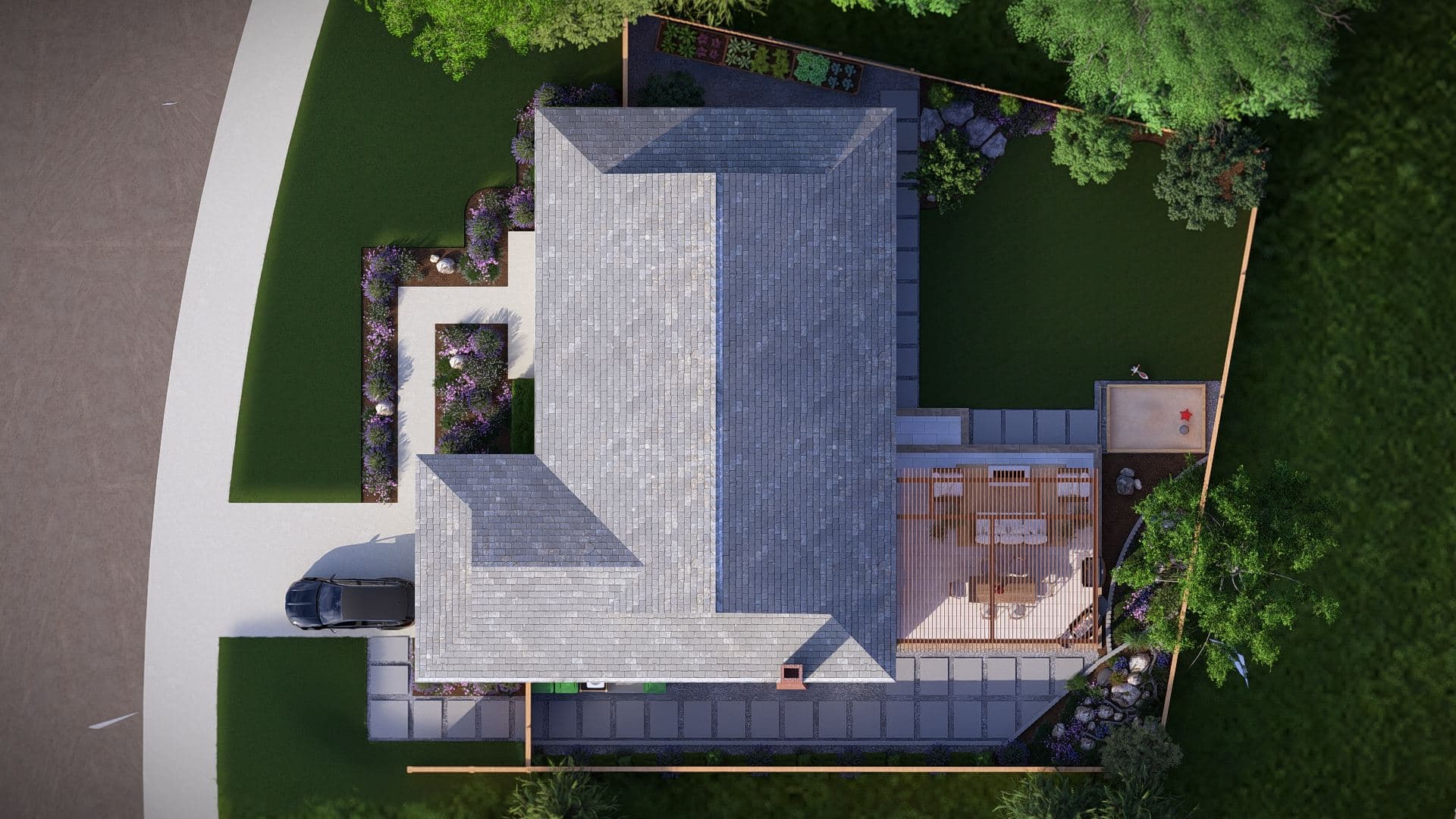
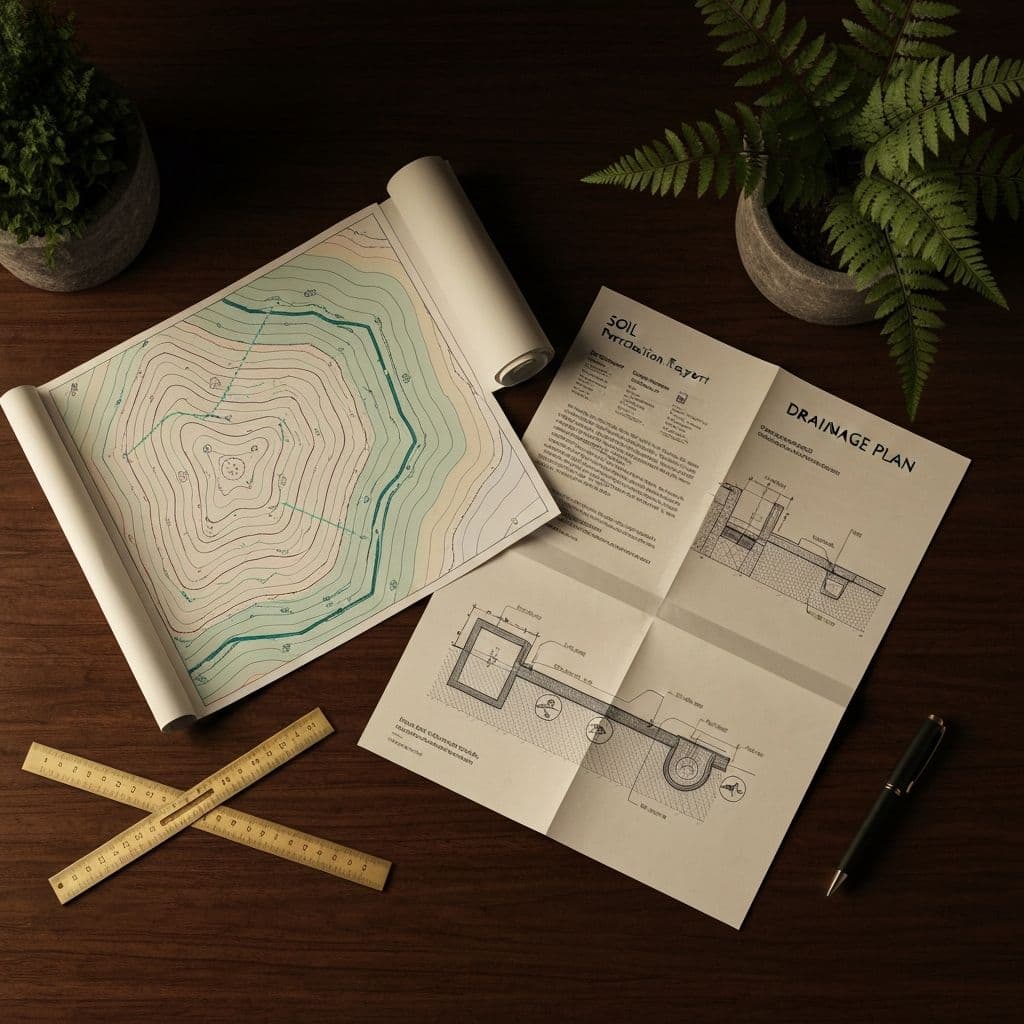
Drainage Deliverables
05 / 05- Site Water Flow Map
- Soil Percolation Report
- Drainage System Design Plan
- Material & Pipe Specifications
- Hardscape Integration Drawing
Water Management Planning
Oregon's rainy seasons are beautiful, unless your yard can't handle them. We design drainage and irrigation systems that protect your property and keep everything thriving, year-round.
Portland · Beaverton · SW Washington ·
OR LCB# 9957 · WA GCC# OLGUICL807RZ · Backflow Certified #719918
The Process
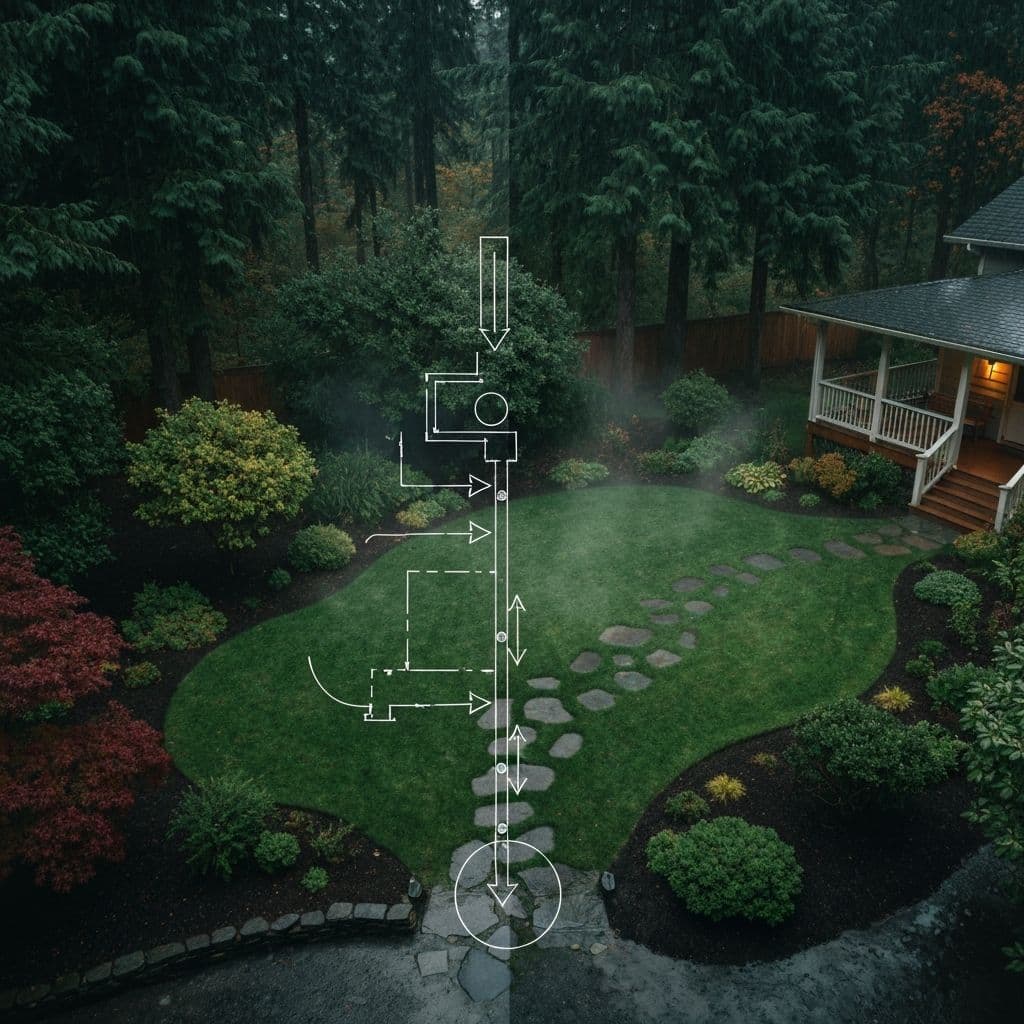
The Portland Metro averages over 40 inches of rain a year. Without a properly designed drainage system, that water finds its own path, through your foundation, across your patio, into your lawn where it pools and kills the root system. We assess exactly how water moves across your property and engineer a solution before construction begins. The fix is always cheaper at the design stage than after the fact.
Irrigation planning follows the same logic. Every plant zone gets the right amount of water, delivered efficiently, adjusted automatically for the season. Designed during the planning phase so it's fully integrated, not bolted on as an afterthought after the hardscape is already in.
5core dimensions
We trace how water moves across your site during heavy rain events, identifying pooling zones, erosion paths, and foundation vulnerabilities before a system is designed.
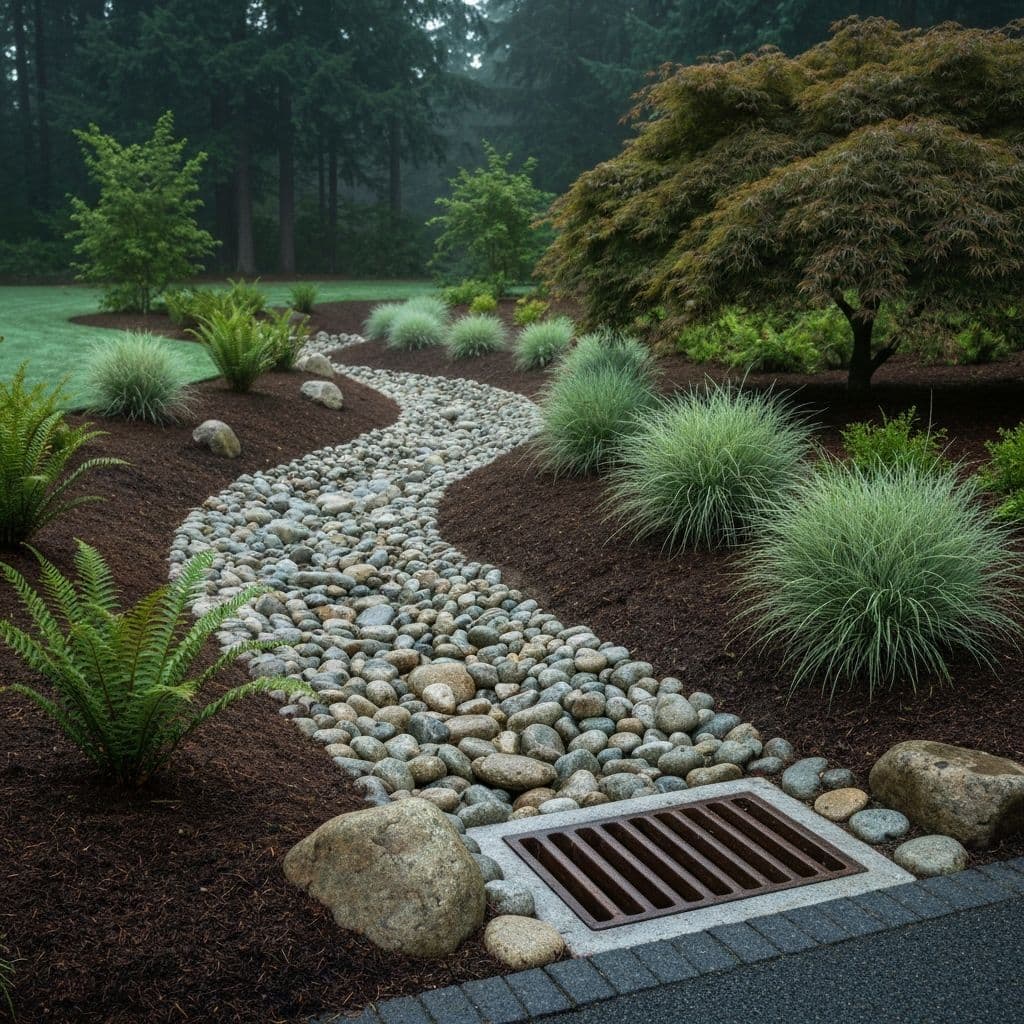
Soil composition determines how quickly water drains. We test percolation rates to determine which solutions, French drains, catch basins, dry stream beds, are actually right for your property.
A fully mapped drainage plan: surface swales, subsurface pipe routes, catch basin placement, and rain gardens, sized and positioned for your specific site conditions.
Each plant zone is mapped for water requirement, coverage area, and pressure. Smart controller integration, drip zones, and head selection are planned here, not during installation.
Designed for Oregon's full weather cycle: winter rains, summer dry spells, and everything between. Winterization and spring startup procedures are built into the system plan from day one.
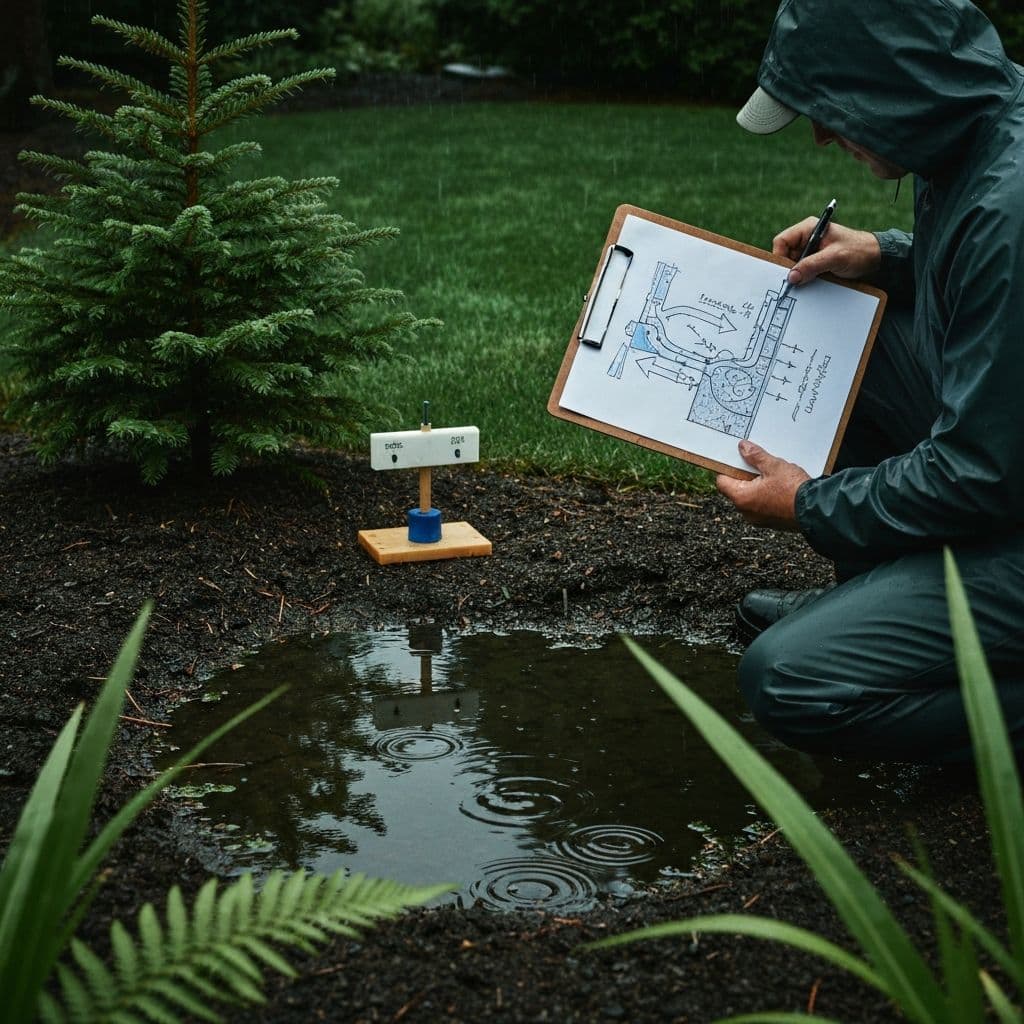
Drainage planning is field work, done on-site, during real conditions. Every pooling zone, slope, and soil pocket is mapped before a designer commits to a system.
Assess surface water flow patterns and pooling areas during rain events
Evaluate soil drainage rates and composition across zones
Design French drain routes, pipe sizing, and catch basin placement
Plan dry stream beds and rain garden locations for natural overflow
Integrate drainage design with retaining walls and hardscape layout
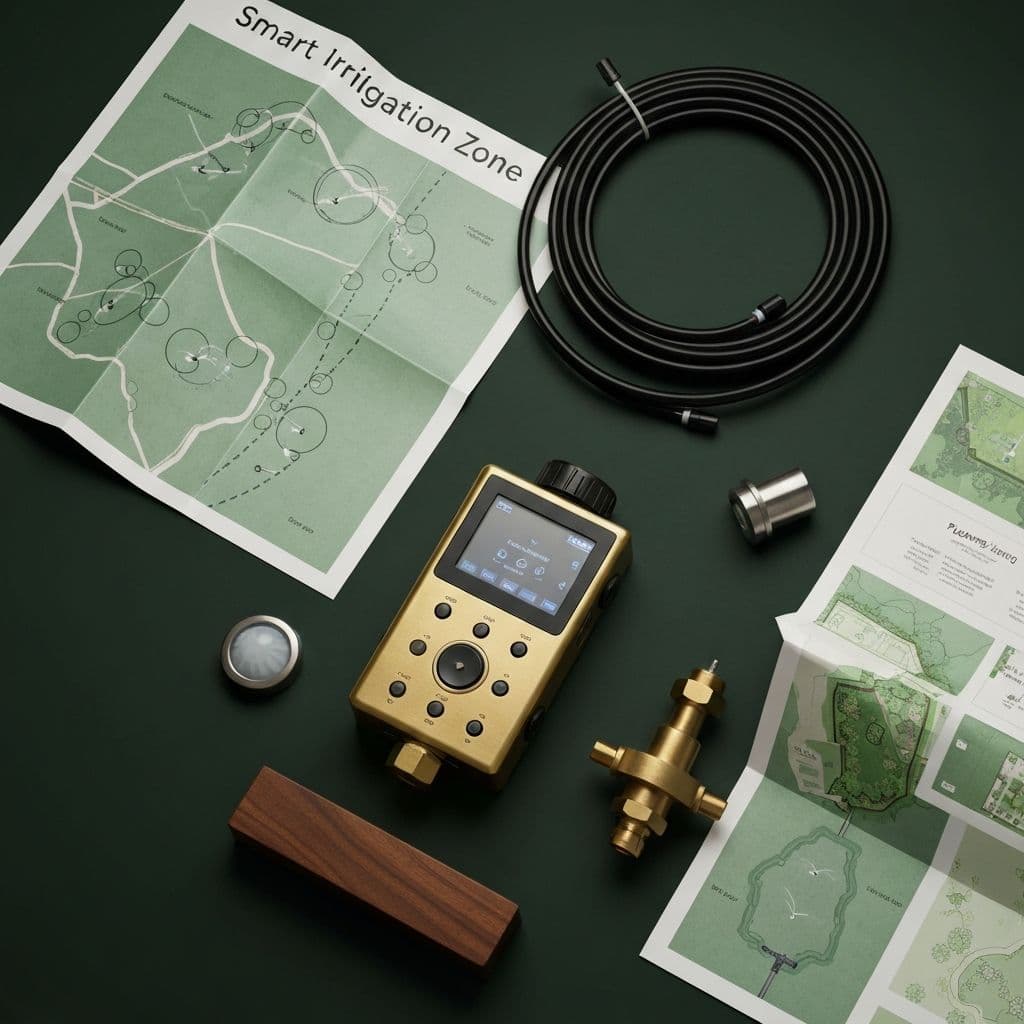
Irrigation is engineered to your plants, not the other way around. Zones are mapped, heads are matched, and the controller is dialed in before a single line goes in the ground.
Map zones by plant type, sun exposure, and water requirement
Select appropriate head types: rotors, fixed sprays, or drip per zone
Design smart controller integration and rain sensor placement
Plan backflow prevention device location and pressure regulation
Build winterization and spring startup procedures into the system plan
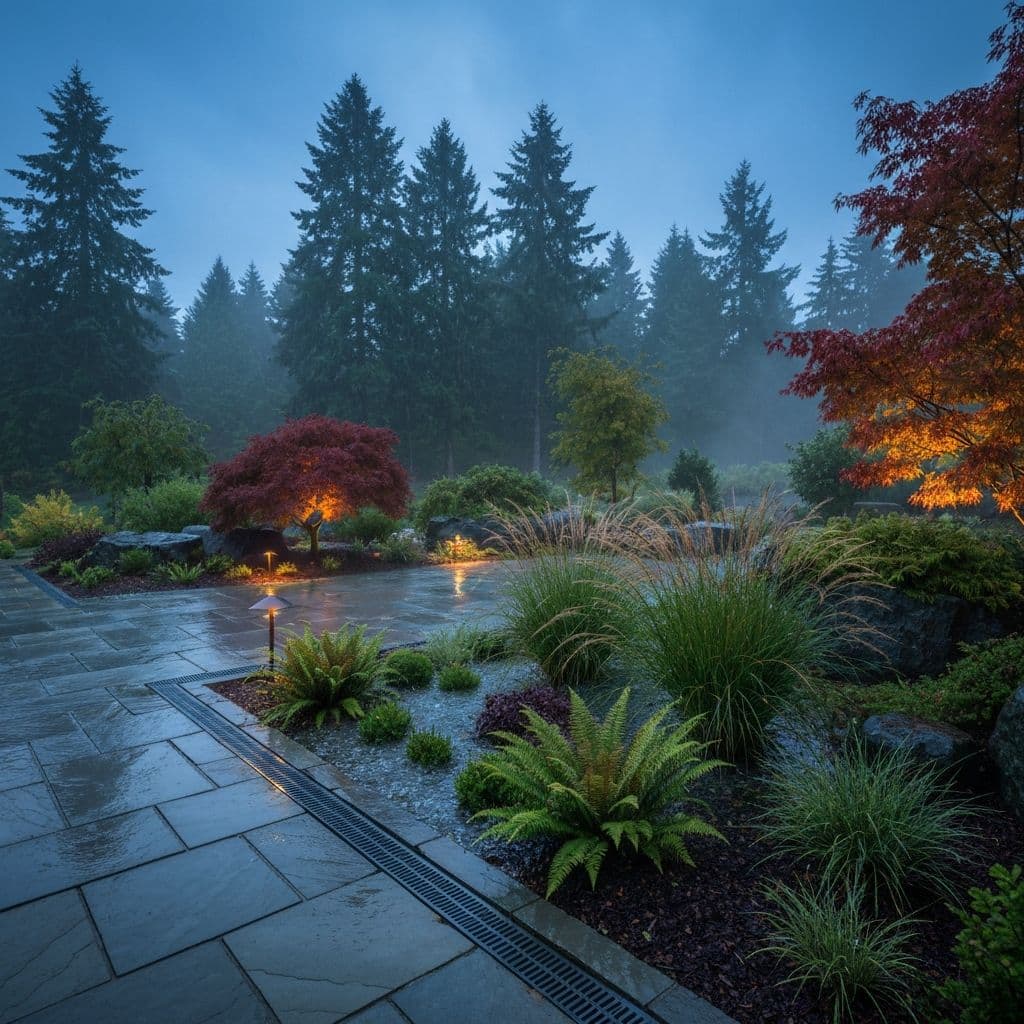
Most drainage and irrigation failures are planning failures, not installation failures. A French drain routed wrong doesn't drain. An irrigation zone that ignores soil type overwaters half the yard and starves the other half. Getting the design right before any pipe is laid is what separates a system that performs for 20 years from one you're repairing every spring.
“The best drainage system is one you never have to think about.”