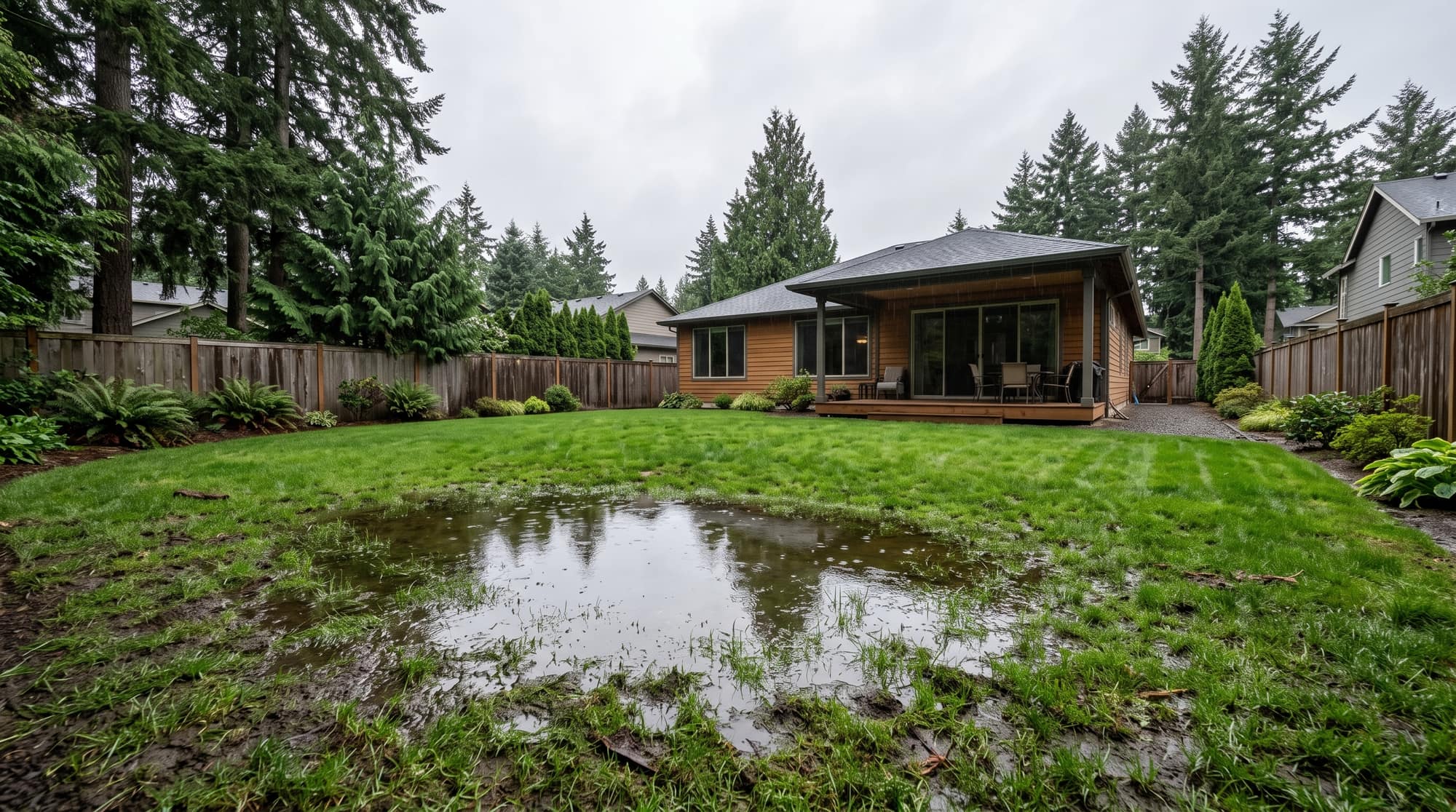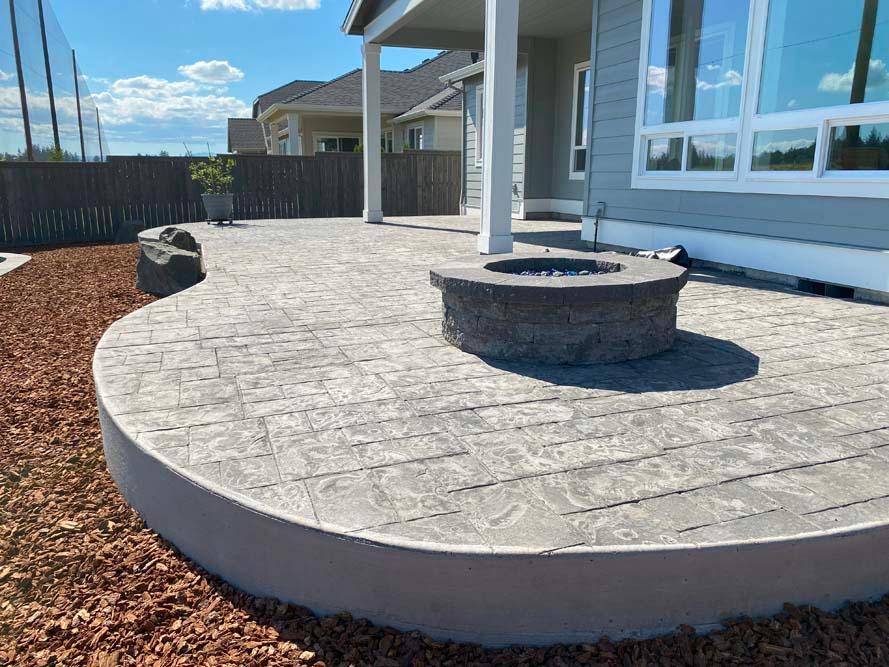
If your yard turns into a shallow pond every November, or you've watched water sheet down a slope toward your foundation, you've probably already looked up French drain installation. Good instinct. Around Portland, months of steady rain land on a lot of heavy clay soil, and the water has nowhere to go. A French drain gives it somewhere.
At Olguin C Landscaping, a landscape design and construction company based in Beaverton, almost every project we sell includes a French drain somewhere. This guide covers how they work, the signs you need one, and what a proper install looks like. It also covers the mistake we see most often: a drain that just moves the soggy spot to a different corner of the yard.
How a French Drain Works
A French drain is a sloped trench lined with filter fabric, bedded with drain rock, and fitted with a perforated pipe. Water always takes the easiest path. When it hits that trench, it drops into the gravel, finds the pipe, and runs downhill to an outlet instead of soaking into your lawn or pushing against your house.
It handles two kinds of water. Surface runoff gets caught as it flows across the yard, and groundwater is pulled out of saturated soil around the trench. That second part matters here. Clay holds water like a sponge, so a yard can stay wet for days after the rain stops.
Signs You Need a French Drain
Most people call us after one bad storm, but the warning signs usually show up long before that:
- Standing water in the yard that hangs around long after a rain
- A permanently soggy strip at the bottom of a slope or along the fence line
- Water pooling against the foundation, or a damp crawlspace
- Mud and erosion where runoff cuts across planting beds
- A retaining wall that's leaning, bulging, or weeping water through the joints
If more than one of those sounds familiar, a drainage plan is worth doing before you put money into a new patio or lawn on top of the problem. Not sure what's causing the puddles in the first place? Our guide to why your yard has standing water walks through the usual culprits.
The Mistake We See Most: Moving Water Instead of Getting Rid of It
Many French drains end in a pop-up emitter, a small cap in the lawn where the water comes back out. Sometimes that's the right call, especially when the drain isn't anywhere near a gutter line. We've installed them when that's what made sense.
The trouble is that a pop-up just takes water from one area and puts it in another. And when you're paying for a French drain, the goal is usually to stop seeing the water at all. We've also seen plenty of drains that quietly empty into the neighbor's yard, which creates a whole new problem.
Whenever we can, and where local rules allow, we connect the French drain to the home's gutter system so the water heads to the nearest storm drain and leaves the property.
One recent hillside project shows how this works. The ground sloped steeply right along the side of the house, and water was collecting at the foundation. We ran a French drain along that slope and tied it into the main gutter line out to the street. Then we covered it entirely in river rock so it reads as part of the landscape, not a utility trench. A natural basalt boulder wall now holds the hillside on both sides.
French Drains and Retaining Walls
Every retaining wall we build gets a French drain behind it. If a wall is there to hold back soil, rain builds up behind it and adds weight and pressure the wall was never meant to carry. Over time that pressure pushes walls out of plumb and puts them at risk of collapse.
We didn't always include it automatically. For years we offered French drains behind walls as a separate line item, and nearly every customer asked for one anyway. So we made it standard. Almost everyone is going to want or need one behind their wall, so it might as well be there from day one.
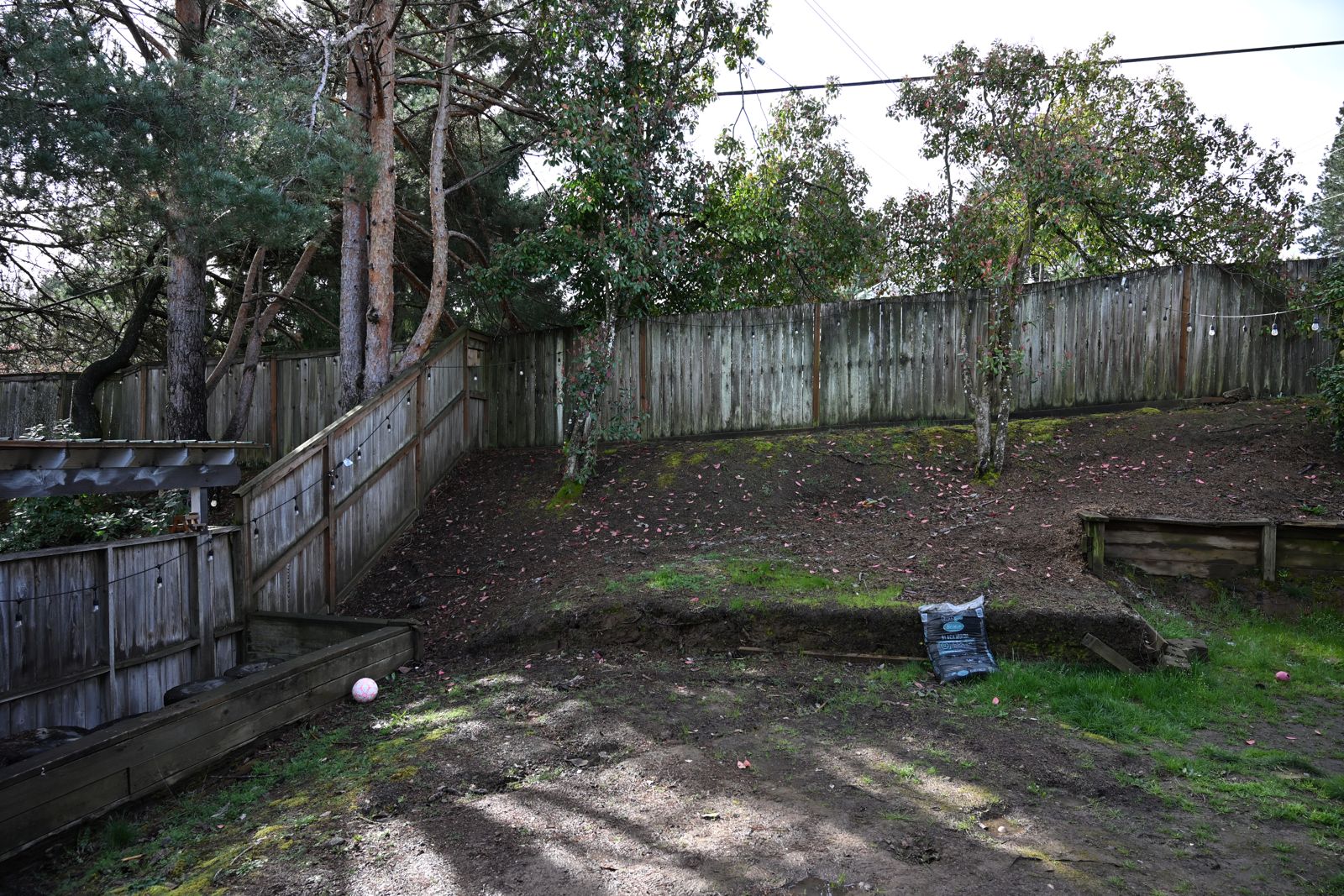
Before: a sloped backyard where runoff came straight down the hill, leaving bare, muddy soil at the bottom.
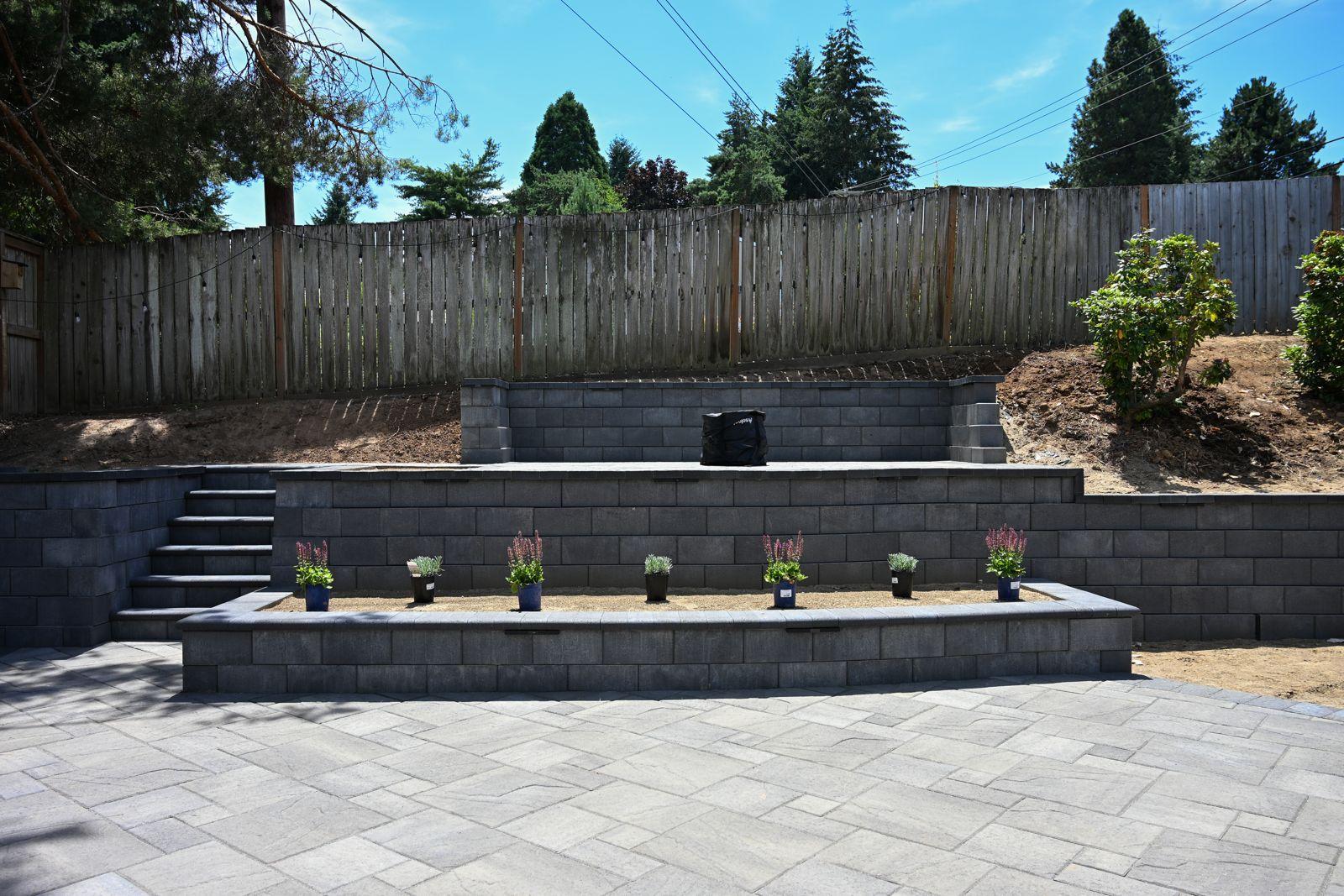
After: tiered block retaining walls, each with a French drain behind it, hold the slope above a new paver patio.
If you're planning a wall, our retaining wall installation guide covers what else goes into a wall that lasts.
What a Proper French Drain Installation Looks Like
Every yard is different, but a well-built drain follows the same basic order:
- Find the source and the destination. We look at where water collects, where it's coming from, and where it can legally and practically go.
- Locate utilities. Oregon law requires a utility locate before any digging. Call 811 or file a request through the Oregon Utility Notification Center at least two business days ahead so lines get marked first.
- Dig with consistent fall. The trench has to slope steadily toward the outlet. A dip in the middle turns into a puddle you can't see.
- Fabric, rock and pipe. Non-woven filter fabric lines the trench, then a gravel bed goes down, then perforated pipe, then more drain rock.
- Wrap it. The fabric folds over the top to keep silt from clogging the stone.
- Finish the surface. We top it with river rock for a visible, decorative drain, or with soil and sod so it disappears.
- Tie into the outlet. Gutter line, storm connection, or a dispersal point, depending on the site.
Can it be done in the rainy season? Yes. The only thing that stops us in winter is excavation on a day with a real downpour. Once the trench is dug, we put up tents and keep working.
French Drain vs. Dry Well
People often ask about a French drain vs. a dry well. A French drain moves water somewhere else. A dry well is an underground pit or chamber that collects water and lets it soak slowly into the surrounding soil.
In fast-draining soil, a dry well can work on its own. In dense clay, which describes many West Side yards, water often soaks out too slowly for a dry well to keep up during a long wet stretch. In those cases a French drain that carries water off the property is usually the more reliable fix. Sometimes the answer is both, and on some lots the real fix starts with regrading so water stops flowing toward the house in the first place.
What Affects French Drain Cost
French drain cost depends far more on the site than on the pipe. The biggest factors are:
- Length and depth of the run
- Access. An open backyard lets a machine dig, while a narrow side yard may mean hand digging.
- Where the water goes. Tying into a gutter line across the property is more work than a short run to a nearby outlet.
- Surface finish. River rock, sod, or restoring planting beds over the trench
- Distance to the job. Like most contractors dealing with today's fuel prices, we charge an equipment mobilization fee to bring the full setup to your property.
A drain built as part of a larger patio, wall or regrading project often costs less per foot than a stand-alone job, since the crew and equipment are already on site. The most accurate number comes from a site visit, so request an estimate and we'll price it for your yard.
Can You Install a French Drain Yourself?
For a short, simple run on flat ground draining into an obvious low spot, a handy homeowner can do it. It's hard, muddy work, but it's doable.
We'd steer you toward a pro when the drain protects a foundation, sits behind a retaining wall, crosses a slope, or has to connect to the gutter system. Getting the fall right over a long run is the part DIY installs most often miss, and you won't find out until the next big storm.
Get Water Moving the Right Direction
A French drain is one of the simplest ways to protect your yard and your foundation from Portland's wet season. When it's built right, you stop seeing the water. That means steady fall, wrapped rock, and an outlet that takes water off your property instead of to the next low spot.
If you're dealing with standing water, a soggy slope or a wall that's started to lean, take a look at our drainage and irrigation planning services or request an estimate. We serve Beaverton, Portland, Hillsboro, Tigard, Lake Oswego and SW Washington.
Frequently Asked Questions
How deep should a French drain be?
Many residential French drains run roughly 18 to 24 inches deep. The right depth depends on what you're catching: shallow for surface runoff, deeper for groundwater or foundation protection.
What are the downsides of a French drain?
A drain without filter fabric can clog with silt over time. A drain without a good outlet just moves the problem around. Both are installation issues, not flaws in the design.
Can I tie my French drain into my sewer line?
Generally no. Stormwater and the sanitary sewer are kept separate, and local rules control where drainage can discharge. Ask your contractor how they'll handle the outlet before work starts.
Do French drains work in clay soil?
Yes. Clay soil is where they matter most, because clay holds water at the surface for so long.
Do I need a French drain behind a retaining wall?
If the wall holds back soil, yes. That's why we include one behind every retaining wall we build.