When it comes to protecting your property from soil erosion and creating usable outdoor space, retaining wall installation services in Portland, OR, play a crucial role.
However, building a retaining wall that can withstand the challenges of Portland's climate requires careful planning, expert craftsmanship, and a deep understanding of local regulations.
In this comprehensive guide, we'll explore the key considerations for selecting materials, navigating permits, ensuring structural integrity, and budgeting for your retaining wall project.
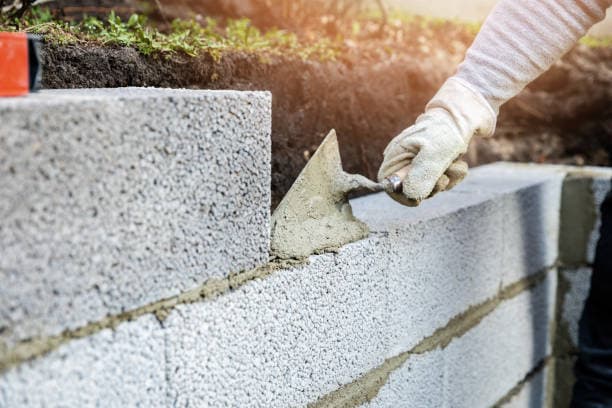
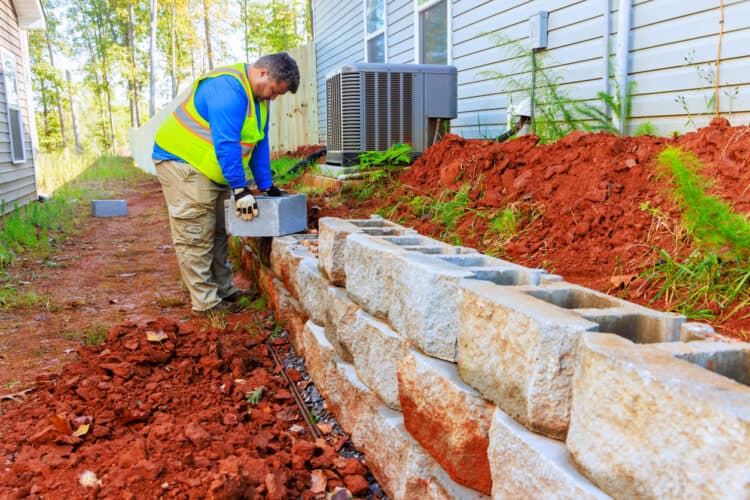
A worker is applying mortar to concrete blocks as part of building a retaining wall
Selecting the Best Retaining Wall Material for Portland's Climate
Portland's climate presents unique challenges for retaining walls, including heavy rainfall, soil erosion, and potential instability.
Choosing the right material is essential for ensuring your wall's longevity and performance.
Popular options include:
- Poured concrete, which offers high strength and durability but can be prone to cracking
- Natural stone, such as basalt or granite, which provides a timeless aesthetic and excellent durability
- Timber, a cost-effective and eco-friendly choice that requires regular maintenance
- Modular blocks, which are easy to install and offer a variety of design options
| Material | Pros | Cons |
|---|---|---|
| Poured Concrete | High strength, durability | Prone to cracking, less aesthetically versatile |
| Natural Stone | Timeless look, excellent durability | Higher cost, labor-intensive installation |
| Timber | Cost-effective, eco-friendly | Requires regular maintenance, shorter lifespan |
Regardless of the material you choose, proper drainage and waterproofing are crucial for preventing hydrostatic pressure buildup and ensuring the wall's long-term stability.
Retaining wall installation services can help you select the best material and design features for your specific site conditions and goals.
Retaining Wall Permit Requirements and City Regulations in Portland
Before starting your retaining wall project, it's essential to understand Portland's permit requirements and city regulations.
In general, you'll need a permit if your wall is:
- Over 4 feet tall, measured from the bottom of the footing to the top of the wall
- Supporting a surcharge, such as a driveway, structure, or sloped backfill
- Part of a terraced landscaping design with multiple walls exceeding 4 feet in total height
To obtain a permit, you'll need to submit plans, calculations, and other documentation to Portland's Bureau of Development Services.
Your retaining wall installation services provider can guide you through this process and ensure compliance with local zoning laws and height restrictions.
| Wall Height | Permit Required? | Additional Requirements |
|---|---|---|
| ≤ 4 feet | No | N/A |
| > 4 feet | Yes | Plans, calculations, and inspections |
| Terraced (total > 4 feet) | Yes | Plans, calculations, and inspections |
Skipping permits or failing to comply with regulations can result in costly fines, legal issues, and potential safety hazards.
Working with experienced retaining wall installation services can help you navigate the permitting process and avoid these risks.
Understanding Property Lines and Neighbor Relations Before Installation
Before installing a retaining wall, it's crucial to understand your property boundaries and maintain positive neighbor relations.
In Portland, you can generally build a retaining wall up to your property line, but it's always best to consult with your neighbors first to avoid potential disputes.
To ensure accuracy, consider having a professional survey conducted to verify your property lines.
This is especially important if your retaining wall will be located near a shared boundary or if there are any easements or underground utilities that may impact the installation process.
If your retaining wall project requires accessing or modifying a neighbor's property, be sure to obtain written permission and maintain open communication throughout the installation process.
Retaining wall installation services can help you navigate these conversations and ensure a smooth, conflict-free experience.
Structural Engineering Requirements for a Safe and Long-Lasting Retaining Wall
For retaining walls over 4 feet tall or those supporting a surcharge, structural integrity is paramount.
Factors like soil composition, water pressure, and proper reinforcement all play a role in designing a wall that can withstand the test of time.
To ensure your retaining wall is engineered for safety and longevity, consider the following:
- Hire a licensed structural engineer to assess your site and develop a custom design plan
- Use appropriate reinforcement techniques, such as rebar, geogrid, or soil anchors, based on the engineer's recommendations
- Ensure the wall's footing is deep enough to prevent settling and shifting over time
- Incorporate proper drainage solutions to alleviate hydrostatic pressure behind the wall
| Wall Height | Reinforcement | Drainage |
|---|---|---|
| 4-6 feet | Rebar, geogrid | Gravel backfill, weep holes |
| 6-8 feet | Rebar, geogrid, soil anchors | Perforated drain pipe, gravel backfill |
| 8+ feet | Engineered design, multiple reinforcements | Comprehensive drainage system |
By prioritizing structural engineering and working with qualified retaining wall installation services, you can ensure your wall is built to last and protect your property for years to come.
Cost Considerations for Retaining Wall Installation in Portland
The cost of retaining wall installation in Portland can vary widely depending on factors such as the size and height of the wall, the materials used, site accessibility, and the complexity of the design.
On average, homeowners can expect to pay between $25 and $50 per square foot for a professionally installed retaining wall.
| Wall Type | Average Cost per Square Foot |
|---|---|
| Timber | $15 - $25 |
| Modular Block | $25 - $40 |
| Poured Concrete | $30 - $50 |
| Natural Stone | $35 - $60 |
To budget effectively for your retaining wall project, consider the following tips:
- Get detailed estimates from multiple contractors and compare the scope of work and materials included
- Factor in additional expenses, such as permits, excavation, drainage systems, and structural engineering fees
- Choose materials that balance your aesthetic preferences with your budget and long-term maintenance needs
- Prioritize quality installation over cutting corners, as a well-built retaining wall can save you money on repairs and maintenance in the long run
Remember, investing in professional retaining wall installation services can provide peace of mind and ensure your wall is built to the highest standards of safety and durability.
Why We Think This Is Important
While it may be tempting to take on a retaining wall project as a DIY endeavor, working with experienced professionals offers several key benefits:
- Expertise in local soil conditions, drainage requirements, and structural engineering principles
- Access to high-quality materials and specialized equipment for efficient, precise installation
- Familiarity with Portland's permit requirements and zoning regulations to ensure compliance
- Warranties and insurance to protect your investment and provide recourse if issues arise
In contrast, DIY retaining wall installations often result in costly mistakes, safety hazards, and reduced property value.
By entrusting your project to skilled retaining wall installation services, you can enjoy a beautiful, long-lasting wall that enhances your outdoor space and protects your property from erosion and damage.
To ensure a successful retaining wall installation, follow these final recommendations:
- Research and compare local contractors based on their experience, portfolio, and customer reviews
- Schedule consultations to discuss your project goals, budget, and timeline
- Verify that your chosen contractor is licensed, insured, and familiar with Portland's specific requirements
- Obtain detailed, written estimates and contracts that clearly outline the scope of work and materials
- Maintain open communication with your contractor throughout the installation process to address any questions or concerns
By prioritizing quality craftsmanship, structural integrity, and compliance with local regulations, you can enjoy a retaining wall that beautifies your property, protects your land, and provides enduring value for years to come.
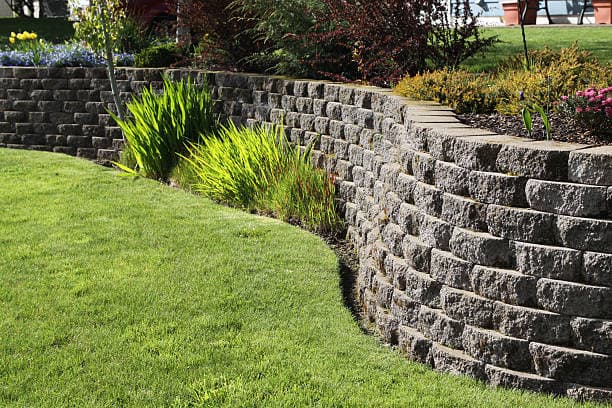
Curved stone retaining wall in landscaped yard with flowers and grass
FAQs
What is the best material for a retaining wall in Portland's climate?
The best materials for retaining walls in Portland's climate are those that can withstand heavy rainfall, soil erosion, and potential instability. Popular options include poured concrete for its strength and durability, natural stone for its timeless aesthetic and excellent durability, timber for its cost-effectiveness and eco-friendliness, and modular blocks for their ease of installation and design versatility. Proper drainage and waterproofing are crucial for all materials to ensure long-term performance.
Do I need a permit for a retaining wall installation in Portland, OR?
In Portland, you'll generally need a permit for retaining walls that are over 4 feet tall (measured from the bottom of the footing to the top of the wall), supporting a surcharge (such as a driveway, structure, or sloped backfill), or part of a terraced landscaping design with multiple walls exceeding 4 feet in total height. To obtain a permit, you'll need to submit plans, calculations, and other documentation to Portland's Bureau of Development Services.
How close to my property line can I build a retaining wall?
In Portland, you can generally build a retaining wall up to your property line, but it's always best to consult with your neighbors first to avoid potential disputes. Consider having a professional survey conducted to verify your property boundaries, especially if your retaining wall will be located near a shared boundary or if there are any easements or underground utilities that may impact the installation process.
What structural engineering requirements must be met for a retaining wall?
Retaining walls over 4 feet tall or those supporting a surcharge require proper structural engineering to ensure safety and longevity. This includes hiring a licensed structural engineer to assess your site and develop a custom design plan, using appropriate reinforcement techniques (such as rebar, geogrid, or soil anchors) based on the engineer's recommendations, ensuring the wall's footing is deep enough to prevent settling and shifting, and incorporating proper drainage solutions to alleviate hydrostatic pressure behind the wall.
How much does professional retaining wall installation cost in Portland?
The cost of professional retaining wall installation in Portland typically ranges from $25 to $50 per square foot, depending on factors such as the size and height of the wall, the materials used, site accessibility, and the complexity of the design. Timber walls generally cost $15 to $25 per square foot, modular block walls range from $25 to $40 per square foot, poured concrete walls average $30 to $50 per square foot, and natural stone walls can cost $35 to $60 per square foot.